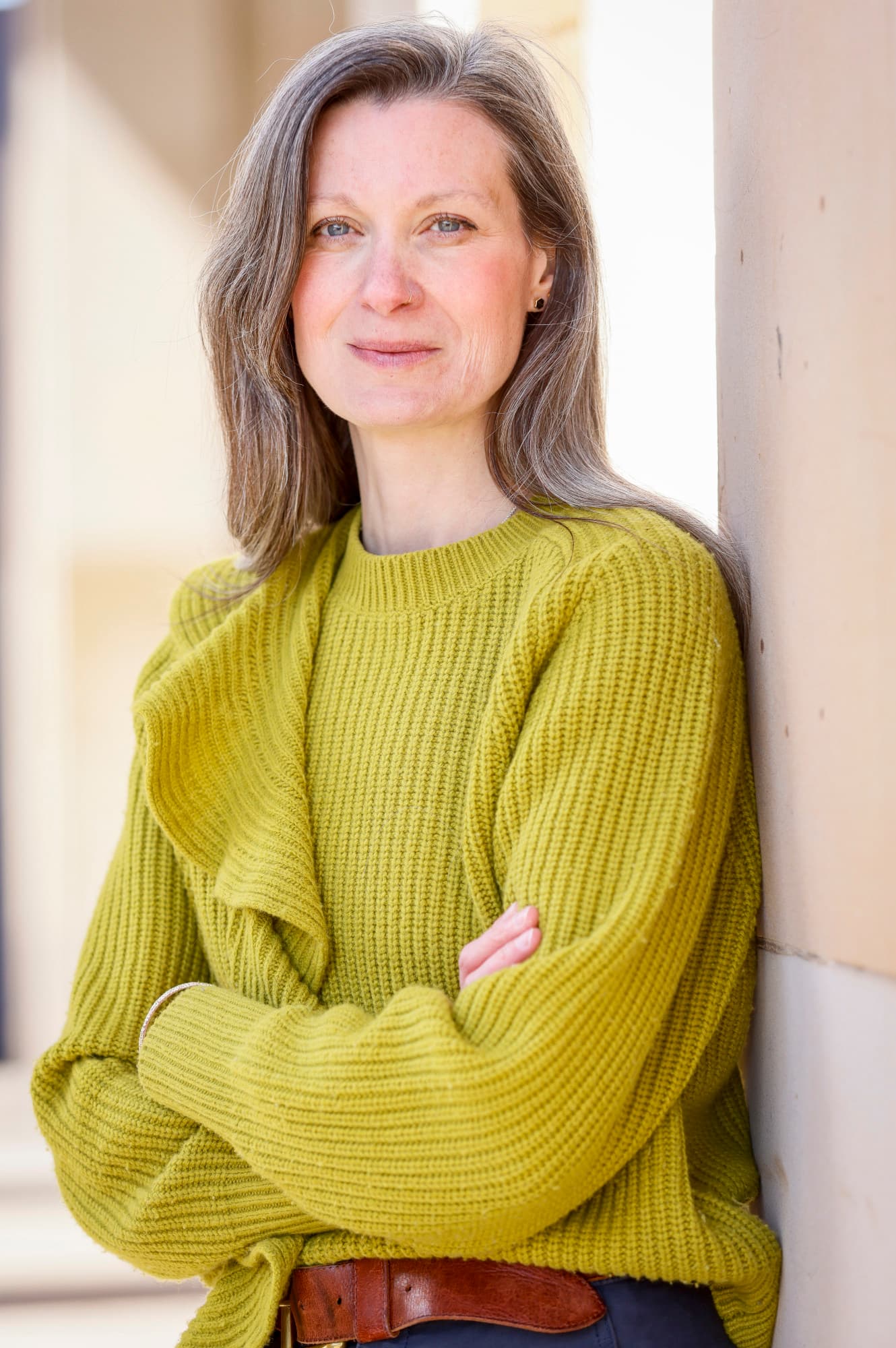
A generative interview with Leah Black from Foundation Scotland and the Regenerative Futures Fund
Leah Black is the Founder and Co-Head of the Regenerative Futures Fund in Edinburgh. Leah has been part of the Many-To-Many (M2M) learning network since its inception in 2023.
This interview was conducted by Jack Becher from the Generative Journalism Alliance. It forms part of a collaborative inquiry with the Many-To-Many Learning Network as it comes to a close in June 2026, and begins to seed possibilities for what comes next.
Jack: Welcome Leah. Could you start off by telling me, why is this work important to you?
Leah: It’s important to me because I believe really strongly that to develop work based around equity, we need to think deeply about power.
A lot of people don’t realise how much power they have. Often we think we’re powerless, or that other people have more power than us. A big part of this work that I’ve been doing over the last few years - both myself within the Regenerative Futures Fund and with the M2M network - has just been a massive learning journey about the power and influence that I have and how I can share that and bring other people on that journey as well.
Even though people might be frustrated within their own organisations, we all have power that we can share. And if we join that power up into ecosystems and think about things that most people find really boring - like governance structures, contracts, risk and how money flows - and if we make sure that people who are not normally part of these conversations are part of these conversations, we can make the transformational change that we’re all looking for.
Thank you for setting out that context. I know you said it’s only been three years, but you’ve done a lot in that time! Which parts of this work had the most life for you, and why?
A big part of what I’ve been focusing my time on is the resource side of this: how do we get resources to flow through systems? That’s probably where I feel the most life within this for me.
Coming out of the work that I’ve been doing in Edinburgh, and coming into spaces with colleagues who are wrestling with different challenges and realising that we’re wrestling with some of the same things, has been helping me put language to the things I was struggling with.
The conversations that we were having were not theoretical. For me, they were very real. We’ve been progressing a lot with the Regenerative Futures Fund, so I found that really helpful in terms of taking action and moving things forward.
I’m hearing something around the practicality of what you were doing and something around the depth that was lacking in other spaces you were in. Can you tell me more about some of the things you did differently in the M2M network that made a real difference?
I’d never been in a space before where people who were a bit nerdy about this kind of thing were taking a really deep dive into it. In spaces I have been in previously, there just wasn’t the depth. A lot of people treat things like governance and contracting as something to tick off the list, the way we’ve always done it. But this was different. People were being really expansive about what this could look like. We did this really practical exercise of developing a prototype for the M2M contract that we used for working together.
What did your time together in the network make possible that wasn’t possible before?
Really practically testing something out, in terms of the collaboration, contracting, money and the systems that we used.
Sometimes when you’re part of a learning journey, it’s not very practical. I’m quite a doer, so I just want to get on and try things out and see how they work — and if they don’t work, we can adapt them. This group made that possible.
And then having the headspace, taking myself out of my day-to-day, and being in these conversations, getting my mind blown a lot, and coming out and feeling like, “Oh my god, what just happened to me in that meeting?”
We probably wouldn’t have moved as much forward thinking around working in an ecosystem had I not been part of this M2M work. We might have got there eventually, but I think we’ve grown something that’s quite unique.
It’s an interesting moment because it’s coming to an end, in a way. But it’s also the start of something new, as other people begin exploring this and continue to develop what you’ve done over the past three years. What wisdom would you like to share with those who come next, or what offerings would you leave behind to those who might come after?
Put what you’re learning into practice at the same time as you’re learning it.
For me, what’s been the most valuable, honestly, is that I am working on something quite complex and completely new and really innovative, but also really practical, because we’re moving forward with a pooled fund that is now sitting at over £9m. Being able to test some of the learning in practice is more fulfilling than just talking and thinking.
That feels really, really valuable. Can you tell me more about this? I’m curious to know what you want to experience next with the Regenerative Futures Fund: how do you see that unfolding?
We are now at this really exciting stage where we’ve got our funders and we’ve got our residence panel, who are decision makers. This is a group that will be involved for 10 years, so they’re involved long term in accountability, learning, monitoring and evaluation, and all sorts of other things. Then we have our cohort organisations, so there’s going to be 11 initiatives that have been moved through this process. Between them will be an ecosystem agreement that we would ask everybody who is part of our ecosystem to sign up to.
Our funders are deliberately called the Oversight and Enabling Board, because their role that they completely lean into is to enable change in Edinburgh, and that role will change and evolve over the next 10 years. We’re encouraging people to get their heads around the fact that this is not a hierarchy. This is an ecosystem: we’re all equal players and everyone has a role to play.
Which of the insights that arose through the M2M journey are you carrying forward into this work?
That it’s okay if things feel really messy and unclear.
Sometimes there’s a worry that you should have the answers. That you should have a perfect document that communicates clearly what you’re doing. The dual experience of being part of the many-to-many work, and then being part of work that we’re doing in Edinburgh, is the challenge of sitting in that messiness and that complexity and doing that with other people. Supporting each other and knowing that it’s okay for things to be that messy and unclear, because we live in a world where people want you to make it into one page and put it into three snappy bullet points.
That seems like a very important insight for those who are carrying this work forward. On that, where are you seeing this work continuing or being seeded in new places?
We get asked quite a lot to talk to people about the work we’re developing in Edinburgh, and quite often the questions are around the collaboration aspect of it, including in quite a practical way. There’s so much interest, because it’s about collaborating in really different ways to how we’ve seen collaboration in the past.
There’s such a brilliant resource already from the M2M work that I point people towards. Even just last week, I had a conversation with somebody who had referenced the M2M work in this initial document that she put together. So people are watching and learning.
That’s amazing to hear! One more question for you, Leah: What is the best thing that could happen?
The best thing that could happen would be if people who were nervous about working in this way - who are maybe sometimes the blocker to this kind of collaboration that’s complex and emergent - could come into the work and understand that there is so much rigor that has to surround this. It’s not just some unusual idea coming together in different ways. There is so much rigor to this.
We need people who will push at the edges.
Yes! Before we close, can I check, is there anything that you expected to come up today in this conversation that hasn’t yet or that you would like to add?
It’s really hard to find the time to be part of these things. A lot of people who are doing this kind of work are doing it on the edge of their desks. But it’s just so difficult to be doing complex and collaborative work alongside your busy job and probably your home life and everything else that’s going on.
I’m really lucky because I was seconded and working full time on the Regenerative Futures Fund. So something I’d say to future people wanting to do this kind of work is: if you’re really passionate about doing this kind of work, make it your main thing, even if it’s only for a short period of time.
Yeah, that’s so important. Finally, Leah, what meaning, if any, was made for you during this conversation?
I probably wouldn’t have thought of this until we got to end this conversation, but I’m just realising how lucky I have been to have the freedom and the time to work on something so different and interesting alongside these other people - and to do this in parallel to the Regenerative Futures Fund. So I’m lucky to be in the right place at the right time.
Thank you so much, Leah.